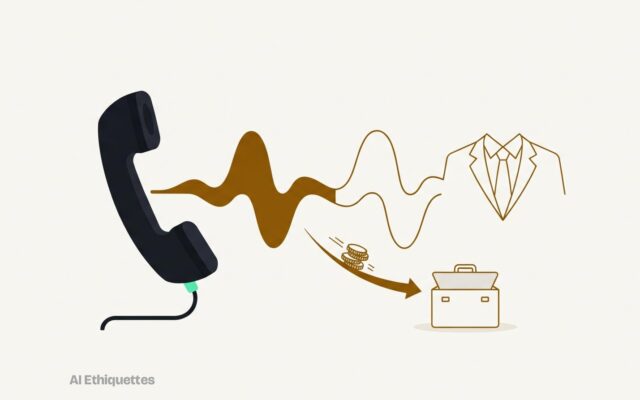
The Suneung AI cheating scare has cost South Korea its education minister. Choi Kyo-jin offered to resign on Sunday 22 November, three days after the national university entrance exam, and President Lee Jae Myung accepted within the hour. Choi said rules changed at the last minute had caused trouble for the public, and above all for test takers.
The resignation is about how the government handled the threat, not about a proven wave of cheating on exam day. No official count of AI cheating cases at this year’s Suneung has been published.
What triggered the Suneung AI cheating scare
The alarm started with a different test. On 15 November the top scorer in this year’s tax accountant exam admitted in a video that he had worn a tiny camera and used a smartphone to get answers from an AI tool, the Associated Press reported. Police are investigating. Earlier in the year, AI smart glasses had been used on an English test in June, and AI cheating turned up in a few university essay tests in October.
The Suneung is far bigger. About 550,000 people sat it on Thursday 19 November at 1,312 centres, and the result shapes which university a student can enter.
At a parliamentary hearing on 16 November, Choi was asked whether he was confident officials could catch AI cheating. His reply, “Perhaps because of my age, I don’t think I could”, added to calls for him to go. A day later Lee Jong-bae, who once sat on Seoul’s city council for the opposition People Power Party, filed a police complaint accusing him of neglecting his duty, according to the Korea Herald.
Rushed rules on exam week
The ministry refused to delay the exam, saying a delay would be more disruptive. Instead it changed the rules several times in the final days. The Korea Times reports that:
- two days before the exam, about 8,400 extra staff were added, roughly 1,800 of them to look for smart devices and 6,600 to watch corridors;
- candidates were told to cover the buttons on their clothes with stickers;
- a day before the exam, items that had been allowed, such as candidates’ own marking pens, correction tape, erasers and pencil lead, were banned;
- new invigilators got hurried online training the day before.
Officials also ran into legal and privacy limits. The AP reported that blocking phone signals would clash with laws against jamming, that staff could not search bags without consent, and that thermal cameras were unlikely because of privacy concerns.
What happens next
A presidential spokesperson said a successor would be chosen “in accordance with procedure”, and Prime Minister Han Seong-sook has been told to oversee the follow-up. The opposition leader, Jang Dong-hyeok, said the resignation was not enough and called for a full investigation.
Two proposals are on the table, both reported by the Korea Herald. The ruling Democratic Party says it will seek a law barring anyone caught cheating with AI from national exams for ten years, and the government has opened a wider review of this year’s national qualification exams. Separately, Seoul’s education office has a roadmap to phase out the Suneung by 2040 in favour of more essay-based assessment, but the national government has not adopted it.
None of this changes South Korea’s main AI law. The AI Basic Act deals with AI developers and providers, not with how exams are run (see what changed under the Act). It is not yet clear whether the government will propose rules for AI wearables themselves; before the exam, officials were debating whether to make device makers add lights or sounds when the devices are in use, the AP reported.
Why it matters outside Korea
Smart glasses, tiny cameras and phone apps that answer a photographed question are sold worldwide. Any high-stakes test, from school-leaving exams to professional licences and online hiring tests, faces the same problem. Korea’s case shows how fast trust in an exam can slip when rules change days before it, and how the obvious fixes, such as signal jammers and bag searches, run into telecoms and privacy law.
What it means for you
- If you are sitting an exam: read the rules on wearables, glasses and watches well before the day, and ask in writing if an item is unclear.
- If you run tests, such as hiring or training assessments: publish your device rules early, explain how they will be checked, and keep checks within privacy law.
- If you set assignments: mix in tasks AI cannot do alone, such as short spoken follow-ups or work built on in-class material.
- For context: see our guide to AI laws in South Korea and more everyday AI ethics stories.
Last checked: 23 November 2026. This explains the law in plain English; it is not legal advice. Spotted an error? Tell us, and see how we check facts.