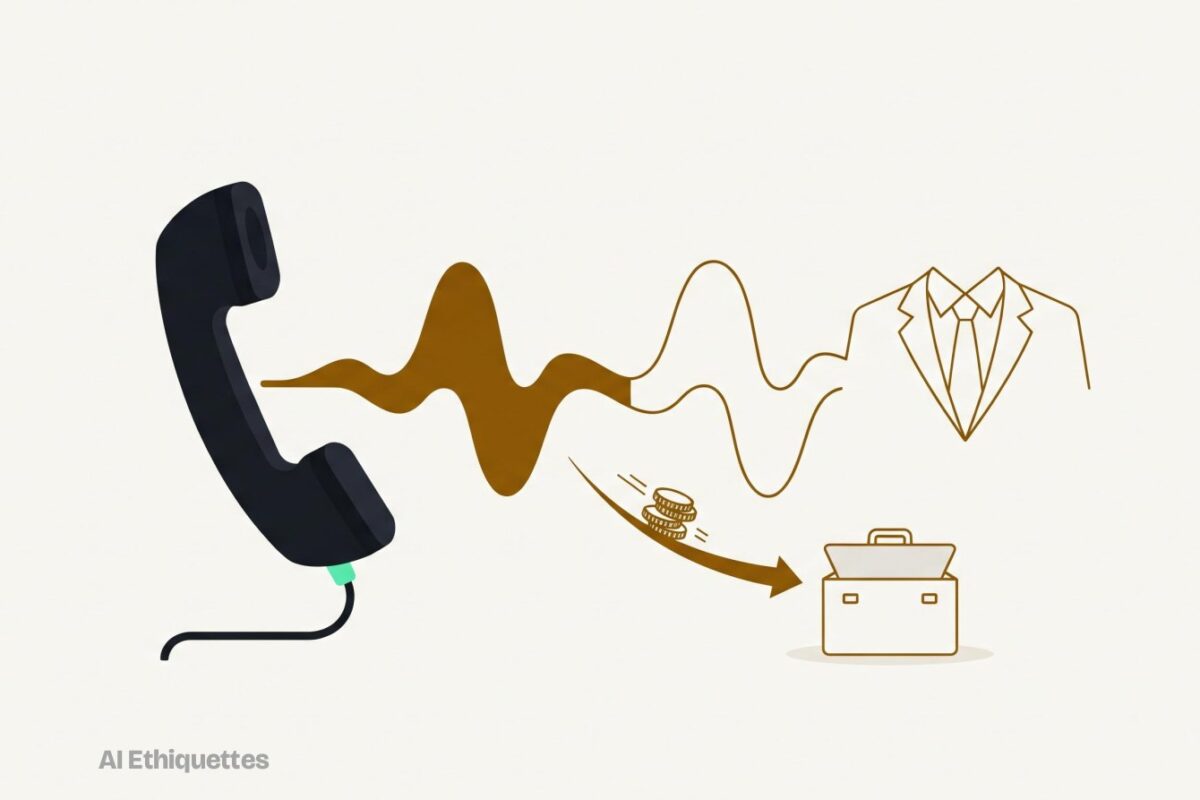
Deepfake CEO fraud has reached a US courtroom on a large scale. Federal prosecutors in New York have charged three men over a scheme they say took more than $129 million from companies around the world by using AI to impersonate bosses and lawyers and talk staff into wiring money. None of the men has been convicted, and they are presumed innocent.
What stands out is the method: a simple, repeatable social engineering scam that, prosecutors say, worked on hospitals, a bank and a pet food company alike.
What prosecutors say happened
On 5 November 2026 the US Attorney’s Office for the Southern District of New York announced the unsealing of an indictment. It says that between 2024 and 2026 the group used what the announcement calls “super intelligence” to mimic the voices and, in some cases, the images of company executives and of attorneys at major law firms. Gizmodo reports that the indictment itself uses the term artificial intelligence.
According to prosecutors, an employee heard from someone posing as their chief executive about a confidential deal that needed a large payment. The fake chief executive then handed them to a fake lawyer at a well-known international firm. That “lawyer” gave the bank details. Prosecutors say one defendant kept a handwritten script titled “Lawyer Call”, with lines meant to stop staff from talking to colleagues about the request.
Once the money arrived, prosecutors allege, it was turned into cryptocurrency to hide its trail. Payments went to accounts in nine countries, including the US, Spain, Portugal, the UAE, Singapore and China.
Who was targeted
The announcement names six victims by type and location, without naming the firms:
- a hospital system in Missouri: about $4.8 million
- a hospital system in California: about $3 million
- a bank in Rhode Island: about $2.7 million
- a financial technology company in the UK: about $11.6 million
- a mutual fund company in Massachusetts: about $4.6 million
- a pet food company in Florida: about $5.2 million
Those six add up to roughly $32 million. Prosecutors have not said how the rest breaks down, and the announcement also gives the total as “more than $100 million” in one place.
The charges
The three accused are Jacob Soall, 41, of Spain and the UK; Sharon Hazan, 54, of Israel; and Guy Sheetrit, 42, of Israel and the UAE. Prosecutors say Soall played the part of UK lawyers, while Hazan and Sheetrit laundered the money.
Each faces seven counts: conspiracy to commit wire fraud, wire fraud, two counts of aggravated identity theft, money laundering conspiracy and two counts of money laundering. The fraud and laundering counts carry a maximum of 20 years each. Soall and Hazan were arrested in Spain in June and August 2026, and Sheetrit in the UK in September. The US has asked for all three to be extradited.
Why this deepfake CEO fraud case stands out
Earlier deepfake scams, such as the 2024 video call at the engineering firm Arup, where an employee saw a fake chief financial officer (CFO), looked like one-off heists. This one, as prosecutors describe it, is an operation with a playbook.
It also shows that prosecutors did not need a new AI law. Every charge is a long-standing fraud, identity theft or money-laundering offence. That does not settle the wider debate over whether AI-specific rules, such as limits on how voice-cloning tools are sold, are needed. It shows only that existing offences work once a fraud has happened.
For a step-by-step look at how these calls are built, read our anatomy of a deepfake voice scam.
What it means for you
AI-generated voices and deepfakes are now good enough to fool colleagues, so recognising a voice or a face is no longer proof. Rely on verification instead. If you work in a finance team or run a small business:
- Call back on a number you already have, never one supplied in the call or in a phishing email.
- Treat secrecy as a warning sign. Fraudsters use it to stop you checking.
- Use two-person approval for new payees and large transfers, with no exceptions for urgency.
- Agree a code word with senior colleagues, and with family, for genuine emergencies.
- Write it down. Put these rules in your AI use policy so new staff know them from day one.
If you think a scammer has targeted you, call your bank at once. In the US, prosecutors ask possible victims to report through the FBI tips portal. For more on the everyday side of AI misuse, see our Everyday AI Ethics hub.
Last checked: 9 November 2026. This explains the law in plain English; it is not legal advice. Spotted an error? Tell us, and see how we check facts.